Vanderbilt Assessment to ADHD Diagnosis: A Parent's Guide
You’ve completed the Vanderbilt Assessment and received your child's results. Now what? It's completely normal to feel a mix of relief, concern, and uncertainty. Understanding the path from a screening tool to a formal diagnosis can feel overwhelming, but you are not alone, and you don’t have to figure it out by yourself.
This guide is here to walk you through each step of the ADHD diagnosis process after using a Vanderbilt Assessment. We will help you understand your results, prepare for important medical appointments, and feel confident asking the right questions. If you haven't yet taken the first step, you can get a clearer picture of your child's behaviors with our free and confidential online assessment.

What Your Vanderbilt Assessment Results Mean
Receiving a report can be confusing at first. Let's break down what the scores mean and their role in the bigger picture. The Vanderbilt Assessment is a powerful starting point, designed to organize observations into a structured format that healthcare professionals recognize and trust.
Understanding the Vanderbilt Scoring System
The Vanderbilt Assessment Scale asks questions about your child's behavior in different settings. The scoring system is designed to highlight areas where your child’s behaviors are more frequent or intense than is typical for their age. It screens for symptoms related to Attention-Deficit/Hyperactivity Disorder (ADHD), both inattentive and hyperactive/impulsive types.
It also looks for signs of other common conditions that can occur alongside ADHD, such as Oppositional Defiant Disorder (ODD), Conduct Disorder (CD), anxiety, and depression. The assessment report automates this scoring, giving you a clear summary without the need for manual calculations.
When Scores Warrant Further Evaluation
A high score in one or more areas doesn't automatically mean your child has ADHD or another condition. Instead, it serves as a strong signal that further evaluation by a qualified professional would be a sensible next step.
Generally, if your child's scores meet the threshold for concern on the performance and symptom scales, it indicates that their behaviors are significantly impacting their life at home, at school, or with friends. This is the point where a professional consultation becomes crucial. Our goal is to provide a reliable first look; the next step is to share these insights with an expert.
Vanderbilt Results as a Screening Tool, Not a Diagnosis
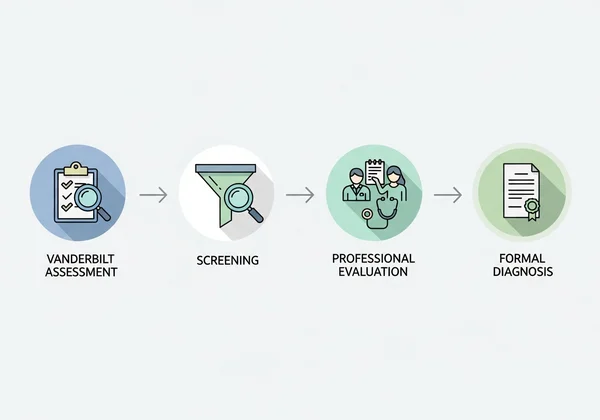
This is the most important takeaway: the Vanderbilt Assessment is a screening tool, not a diagnostic tool. Only a trained healthcare professional, such as a pediatrician, child psychologist, or psychiatrist, can provide a formal diagnosis.
Think of it like a vision screening at school. If a child has trouble reading the eye chart, it doesn't mean they need glasses for sure—it means they should see an optometrist for a full examination. Your Vanderbilt results serve the same purpose: they provide valuable, organized information to start a productive conversation with a professional.
Preparing for Your Child's Clinical Evaluation
A productive clinical visit starts with good preparation. The information you gather now will help your child’s doctor get a complete and accurate picture of the situation. Your Vanderbilt results are a key piece of this puzzle.
Gathering Essential Documentation
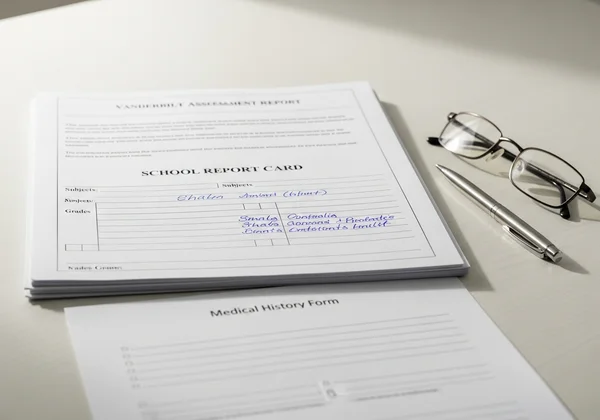
Before your appointment, collect all relevant documents. This preparation makes the evaluation process smoother and more effective. Your folder should include:
- Your Vanderbilt Assessment Report: Bring the parent report and, if possible, a teacher report. You can easily have a teacher complete their teacher assessment through our platform.
- School Report Cards: Look for comments on behavior, focus, and social interactions.
- Medical History: Note any relevant health issues, past or present.
- Family History: Mention if any close relatives have been diagnosed with ADHD or other mental health conditions.
Creating a Symptom Timeline
Doctors will want to know when behaviors started and how they've changed. Try creating a simple timeline of your child's symptoms. For example, when did you first notice their distractibility or hyperactivity? Did these behaviors get worse after a specific event, like starting a new grade?
Note where and when the symptoms occur. Are they worse during homework time? Do they happen mostly at school or also during playdates? These details provide crucial context that a simple score cannot.
School Records and Teacher Feedback Collection
Your child's teacher is a vital partner. Their observations provide a view of your child's behavior in a structured, academic environment. If you haven't already, ask your child's teacher to complete a Vanderbilt Teacher Rating Scale.
You can direct them to complete the form confidentially on our platform. Combining your observations at home with the teacher’s observations at school gives the doctor a well-rounded view, which is essential for the comprehensive ADHD diagnosis process for children.
The ADHD Evaluation Process: What to Expect
Knowing what happens during a clinical evaluation can reduce anxiety for both you and your child. The process is designed to be thorough to ensure the correct diagnosis and treatment plan. It goes far beyond a single questionnaire.
Types of Healthcare Providers Who Diagnose ADHD
Several types of professionals are qualified to diagnose ADHD in children. These include:
- Pediatricians or Family Doctors: Often the first point of contact. Many are comfortable diagnosing and managing straightforward cases of ADHD.
- Child Psychiatrists: Medical doctors specializing in the diagnosis and treatment of mental health disorders in children.
- Child Psychologists: Experts in child development and behavior who conduct comprehensive psychological testing.
- Developmental Pediatricians: Specialists in child development and conditions that affect it, including ADHD.
- Pediatric Neurologists: Doctors who focus on brain-related conditions.
Comprehensive Assessment Components Beyond Vanderbilt
A formal diagnosis involves more than just rating scales. The clinician will conduct a comprehensive evaluation, which may include:
- Detailed Interviews: The doctor will talk with you and your child separately.
- Physical Examination: To rule out other medical conditions that could cause similar symptoms.
- Review of Records: This is where the documents you prepared become essential.
- Additional Questionnaires: They may use other tools besides the Vanderbilt, like the Conners Scale.
- Direct Observation: The professional will observe your child’s behavior during the appointment.
Medical Evaluation and Differential Diagnosis
A key part of the process is "differential diagnosis." This means the doctor will carefully consider and rule out other possible causes for your child's symptoms. Conditions like anxiety, learning disabilities, sleep problems, or even hearing issues can sometimes mimic the symptoms of ADHD.
This thorough approach ensures that your child receives the right diagnosis and, consequently, the most effective support. It’s a process of careful investigation, with your Vanderbilt report serving as the starting point.

Your Journey After the Vanderbilt Assessment
Your appointment is a two-way conversation. Asking questions empowers you to be an active partner in your child's care. Here are some key questions to consider, organized by topic.
Questions to Ask During the Diagnosis Appointment
- How do my child’s Vanderbilt scores align with what you see today?
- Based on all the information, what is your professional conclusion?
- Are there any other possible conditions we should consider?
- Can you explain what this diagnosis means for my child's development?
Questions Regarding Treatment Options and Next Steps
- What are the different treatment options available (e.g., behavioral therapy, medication, school support)?
- What are the pros and cons of each approach for a child my child’s age?
- What is the first step you recommend we take?
- Can you recommend any resources, such as therapists or parent training programs?
Questions About Follow-up and Monitoring
- How will we monitor my child's progress?
- How often should we have follow-up appointments?
- What signs should I look for to know if the treatment is working?
- Who should I contact if I have questions between appointments?
Taking Your Next Steps with Confidence
Navigating the journey from a Vanderbilt Assessment to an ADHD diagnosis is a significant step toward helping your child thrive. Remember, the assessment is a starting point—a tool that empowers you with structured information to begin a meaningful conversation with a healthcare professional. You have already taken a proactive step in understanding your child's needs.
As you move forward, remember these important points:
- Think of the Vanderbilt Assessment as a helpful first step—not a final diagnosis. It's designed to connect you with professionals who can provide a complete evaluation.
- Being prepared makes a big difference. When you gather documents and teacher feedback before your appointment, you're helping your child's doctor get a full picture of their situation.
- Getting a diagnosis is a thorough process that looks at everything about your child. This careful approach ensures the most accurate understanding of their needs.
The path forward involves collaboration with doctors, teachers, and your child. Whether you are just starting to wonder about your child's behavior or you are preparing for your first doctor's visit, having clear, organized information is crucial. You can start your assessment today to gain the clarity needed to move forward with confidence.
Frequently Asked Questions About ADHD Diagnosis After Vanderbilt
How soon after the Vanderbilt Assessment should I seek a diagnosis?
If the results from the Vanderbilt Assessment indicate that your child's symptoms are significant and causing impairment, it is advisable to schedule an appointment with a healthcare professional soon. There is no mandatory waiting period. Using the results as a guide, you can confidently tell your doctor, "I have some concerns based on this screening, and I'd like to discuss them."
Can I use Vanderbilt results for school accommodations?
While a Vanderbilt Assessment report is powerful evidence, most schools require a formal diagnosis from a qualified medical professional to grant official accommodations, like an Individualized Education Program (IEP) or a 504 Plan. However, your report is an excellent tool to start the conversation with the school's support team and can justify informal classroom adjustments while you pursue a formal diagnosis.
What if my child's Vanderbilt results are borderline?
Borderline scores can be confusing, but they still provide valuable information. It may mean your child has some symptoms of inattention or hyperactivity that are concerning but don't yet meet the full criteria. In this case, continue to monitor their behavior. You can use our tool to retake the assessment after a few months to track changes. It is still worthwhile to discuss these borderline results with a professional, as they can offer guidance on supportive strategies, even without a formal diagnosis.