Vanderbilt Assessment Scale: History, Validity, and Why It's Trusted
The journey to understanding your child's behavior can feel complex and overwhelming. For parents, educators, and clinicians, finding a reliable starting point is crucial. How do you know if the tool you're using is trustworthy? This is where the NICHQ Vanderbilt Assessment Scale comes in, serving as a gold standard in the preliminary screening of ADHD for children aged 6-12.
Ever wondered why the Vanderbilt Assessment is the go-to for spotting potential signs of ADHD early? Let's dive into its history, the science behind it, and why so many families and professionals trust it. If you're ready for a clear, informed first step, our easy-to-use online Vanderbilt assessment can help you begin.

The Origins of Trust: Vanderbilt Assessment History
A tool’s reliability often starts with its history. The Vanderbilt Assessment wasn’t created overnight; it was developed through a rigorous process guided by leading experts in child health. Understanding its background helps clarify why it remains a trusted resource for families and professionals worldwide.
From NICHQ Guidelines: How the Scale Developed
The Vanderbilt Assessment Scale was developed by the National Initiative for Children’s Healthcare Quality (NICHQ) with support from leading health organizations. Its creation was part of a larger effort to equip pediatricians and parents with practical, evidence-based tools. The goal was to standardize how ADHD symptoms were observed and recorded, ensuring consistency in initial screenings.
The scale directly aligns with the diagnostic criteria for ADHD outlined in the American Psychiatric Association's Diagnostic and Statistical Manual of Mental Disorders (DSM). This connection ensures the questions are relevant, targeted, and based on established clinical standards.

Evolution of the Vanderbilt Scale: Key Milestones and Updates
Like any robust scientific tool, the Vanderbilt Assessment has evolved. Over the years, it has been refined based on extensive research and clinical feedback. These updates have expanded its scope and improved its accuracy.
A big update added screens for conditions that often co-occur with ADHD. Think oppositional-defiant disorder (ODD), conduct disorder (CD), anxiety, and depression. This evolution transformed the scale from a single-focus tool into a more comprehensive screener, offering a broader view of a child's overall well-being.
Unpacking Vanderbilt Assessment Validity and Reliability
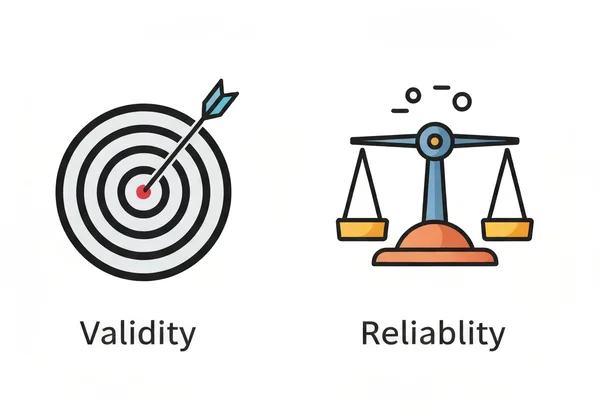
For any assessment to be useful, it must be both valid and reliable. These technical terms answer two simple questions: Does the test measure what it claims to? And does it produce consistent results? The Vanderbilt Assessment has been studied extensively to ensure it meets these high standards.
What is Psychometric Validation? Explaining Validity in Context
Validity is straightforward: Does it actually measure symptoms of ADHD? Yes. Think of it like a kitchen scale that correctly measures pounds, not inches. The Vanderbilt Assessment's validity means it accurately flags the behaviors associated with ADHD and related conditions.
Researchers checked its validity against real clinical diagnoses and other established tests. The results? The Vanderbilt scale reliably spots children who are at risk, making it a perfect tool for early screening.
Measuring What Matters: Internal Consistency and Test-Retest Reliability
Reliability refers to the consistency of a test. If nothing changes, a reliable test should give you similar results every time. The Vanderbilt Assessment demonstrates reliability in two key ways:
- Internal Consistency: This means all questions related to a specific symptom (like inattention) work together to measure that same concept. The answers are coherent and paint a consistent picture.
- Test-Retest Reliability: If you fill out the scale and then fill it out again a short time later (without any major changes in your child's behavior), the scores should be very similar. This shows the scale is stable and not just capturing random moments.
Clinical Studies & Evidence: The Scientific Backing of the Vanderbilt Scale
The trust placed in the Vanderbilt Assessment isn't based on opinion; it’s built on a solid foundation of scientific evidence. Numerous clinical studies have examined the Vanderbilt Assessment Scale and confirmed its effectiveness as a screening tool. This is why organizations like the American Academy of Pediatrics (AAP) recommend its use in clinical practice.
This scientific backing gives parents and educators confidence that they are using a tool that is both accurate and respected in the medical community. To access this trusted framework, you can try our free tool and get immediate insights.
Why the Vanderbilt Scale is a Trusted ADHD Screening Tool
Beyond its scientific foundation, the Vanderbilt Assessment is trusted for its practical design and comprehensive approach. It empowers users by providing a structured way to observe and report on a child's behavior, leading to more productive conversations with healthcare professionals.
Comprehensive Screening: Beyond Core ADHD Symptoms
One of the greatest strengths of the Vanderbilt Assessment is its broad scope. While it's an excellent tool for screening ADHD, it doesn’t stop there. It includes questions that help identify signs of other potential challenges, such as anxiety, depression, and conduct issues.
This is incredibly important because these conditions often appear alongside ADHD. Identifying them early allows for a more complete understanding of a child's needs and helps guide a more effective support plan. This holistic view is a key reason why it is a preferred ADHD screening tool.
Parent and Teacher Forms: A Dual Perspective for Enhanced Accuracy
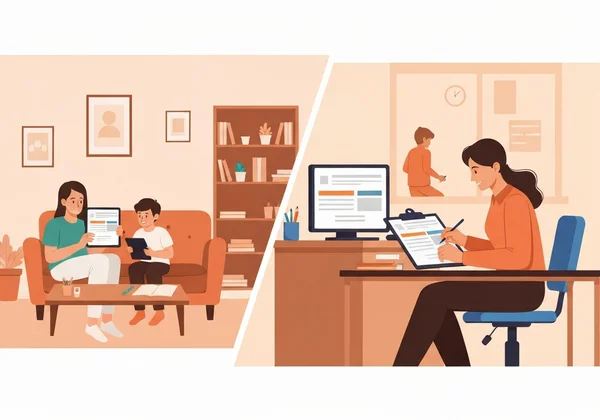
A child’s behavior can vary a lot between home and school. They may act one way at home and completely differently in a structured classroom setting. The Vanderbilt Assessment accounts for this with separate forms for parents and teachers.
Using both gives you a full 360-degree view. This dual perspective is crucial because it helps spot if behaviors are situational (just at home, for instance) or consistent everywhere. For parents like Jennifer, this was a game-changer. She noticed her son struggling with focus at home, but the teacher's report confirmed it was happening in the classroom, too. This gave her the confidence and concrete data she needed for her pediatrician visit. The result is a much clearer, more reliable picture.
Limitations and Ethical Use: What the Vanderbilt Can and Cannot Do
Establishing trust also means being transparent about a tool's limitations. It is essential to remember that the Vanderbilt Assessment is a screening tool, not a diagnostic one. A high score suggests a child may be at risk and that a follow-up with a qualified professional is recommended.
It cannot provide a diagnosis. A formal diagnosis can only be made by a qualified healthcare provider—like a pediatrician, psychiatrist, or psychologist—after a comprehensive evaluation. The scale is designed to be the first step in that process, helping you organize observations to start a meaningful conversation.
Empowering Informed Decisions with a Trusted Assessment
So, the Vanderbilt Assessment Scale isn't just another form. It's a trusted tool built on a solid history, science, and a practical design that works for real families. It gives you a clear, structured way to document your observations, turning those nagging concerns into organized, actionable information.
Know its strengths (and its limits), and you’ll see the Vanderbilt for what it is: your smart first move. It’s the key to sparking productive conversations with healthcare professionals and making sure your child gets the right support.
Ready to gain a clearer understanding? Start your assessment on our secure platform today and receive an instant report to guide your next steps.
Frequently Asked Questions (FAQ)
What is the Vanderbilt Assessment, and how is it used?
The Vanderbilt Assessment is a standardized questionnaire used to screen school-aged children (6-12) for ADHD and other common behavioral and emotional concerns. Parents and teachers answer questions about a child's behaviors at home and school. The results help identify children who may need a further professional evaluation. You can easily complete the forms using our confidential online tool.
Is the Vanderbilt ADHD assessment accurate for all children?
The Vanderbilt Assessment has been shown to be a highly accurate and reliable screening tool for children aged 6 to 12. However, no screening tool is 100% perfect for every child. Factors like cultural background or developmental uniqueness can influence behaviors. That's why the results should always be interpreted as a starting point for a conversation with a healthcare professional, not as a final conclusion.
What conditions does the Vanderbilt Assessment screen for besides ADHD?
Beyond the core symptoms of inattention and hyperactivity/impulsivity associated with ADHD, the scale also includes sections to screen for common co-occurring conditions. These include oppositional-defiant disorder (ODD), conduct disorder (CD), anxiety, and depression. This makes it a comprehensive tool for an initial behavioral health check.
Can the Vanderbilt Assessment be used for adults or different age groups?
The NICHQ Vanderbilt Assessment Scale was specifically designed, validated, and normed for children aged 6 to 12. It is not intended or validated for use with toddlers, adolescents outside this age range, or adults. Using it for other age groups would not produce reliable results. There are other assessment tools specifically designed for those populations.