Vanderbilt Assessment Results: Understanding Your Child's ADHD Profile
Receiving the results of a Vanderbilt Assessment for your child is a significant step. You’ve noticed challenges with focus, energy, or behavior, and you sought out a reliable tool to gain more insight. But now you're looking at a report filled with numbers and scores. What does it all really mean for your child?
It can feel overwhelming to translate these scores into a real-world understanding of your child's unique needs. This guide is here to help. We will walk you through how to decipher your report, moving beyond the numbers to see the complete picture of your child's strengths and challenges.
Our online Vanderbilt Assessment tool provides an easy-to-use version of this trusted screening tool, giving you instant results. If you're ready to begin, you can start your assessment at any time.

Deciphering Your Vanderbilt Assessment Results: Beyond the Score
The Vanderbilt Assessment Scale is much more than a simple pass-or-fail test. It’s a detailed snapshot of your child's behavior in different settings. Developed by the National Institute for Children's Health Quality (NICHQ), it's designed to identify specific patterns that might suggest ADHD or other related conditions. Understanding these patterns is the key to unlocking the story behind the scores.
Think of the report not as a final label, but as a map. It highlights areas that may require more attention and provides a structured way to communicate your concerns with doctors and educators. Your goal is to use this map to navigate the next steps in supporting your child effectively.
Understanding the Core Domains
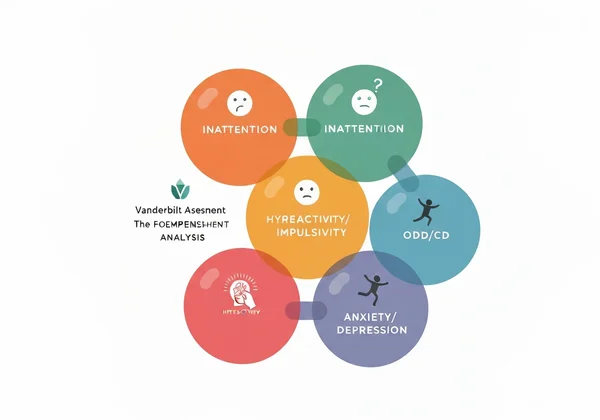
Your Vanderbilt report is broken down into several key sections, or "domains." Each domain measures a different set of behaviors. A high score in a particular domain simply means that your child frequently displays the behaviors associated with it.
Here are the primary areas the assessment looks at:
- Inattention: This section screens for difficulties with focus, staying on task, listening to directions, and organization. A high score here might reflect the "daydreamer" who often misplaces things or struggles to finish homework.
- Hyperactivity/Impulsivity: This domain measures behaviors like fidgeting, being unable to stay seated, interrupting others, and acting without thinking. These are the more visible, energetic symptoms often associated with ADHD.
- Oppositional-Defiant Disorder (ODD) & Conduct Disorder (CD): The scale also screens for behaviors like arguing with adults, deliberately annoying others, or showing aggression. These sections help identify challenges that go beyond typical ADHD symptoms.
- Anxiety & Depression: This part of the assessment looks for signs of internal struggles, such as frequent worrying, sadness, or loss of interest in activities.
By looking at which domains have high scores, you can begin to see a more defined picture of your child’s specific challenges.
The Importance of Multiple Perspectives
The Vanderbilt Assessment includes separate forms for parents and teachers for a crucial reason: a child’s behavior can change dramatically depending on their environment. A child who is quiet and withdrawn in a busy classroom might be energetic and impulsive at home. Conversely, the structure of school might help a child manage their symptoms, while the freedom of home allows them to become more dysregulated.
Neither perspective is more "correct" than the other. Both are vital pieces of the puzzle. When a doctor reviews both reports, they gain a complete picture of your child. This comprehensive understanding helps distinguish between situational behaviors and consistent patterns across different environments. This distinction is crucial for properly understanding conditions like ADHD.
Unpacking ADHD Profiles: Identifying Your Child's Unique Presentation
ADHD is not a one-size-fits-all condition. The specific pattern of scores on the Vanderbilt Assessment can help point toward one of the three main presentations, or "subtypes," of ADHD. Understanding your child's likely presentation is essential for finding the right strategies to help them succeed.
Our advanced tool can help you make sense of these complex patterns. To see how your child's specific scores create a unique profile, you can get deeper insights with our optional AI-powered analysis.
The Three Main ADHD Presentations
Based on the scores in the core ADHD domains, your child's profile will likely align with one of these presentations:
-
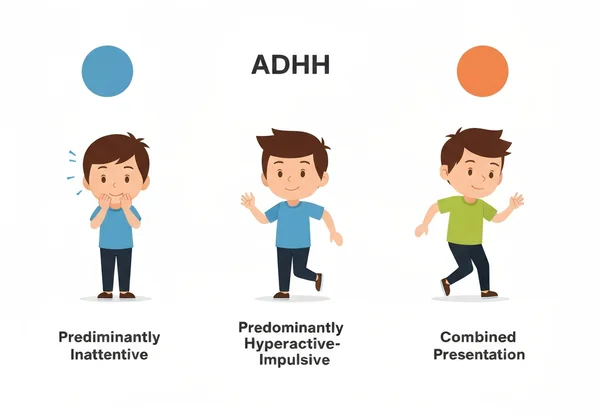
Predominantly Inattentive Presentation: Children with this profile have high scores in the inattention domain but not in the hyperactivity-impulsivity domain. They may struggle with organization, forget instructions, and get easily distracted. Because they aren't typically disruptive, their challenges can sometimes be overlooked.
-
Predominantly Hyperactive-Impulsive Presentation: This profile is marked by high scores for hyperactivity and impulsivity, with fewer signs of inattention. These children are often described as being "on the go," may act without thinking, and find it hard to wait their turn.
-
Combined Presentation: This is the most common presentation of ADHD. A child with a combined presentation has high scores in both the inattention and hyperactivity-impulsivity domains. They face a mix of challenges related to focus, self-control, and restlessness.
How Score Patterns Reveal Individual Needs
Your child is more than just an ADHD subtype. The Vanderbilt Assessment's true strength lies in how it reveals the interplay between different challenges. For example, two children with Combined Presentation ADHD can have vastly different experiences.
One child might have very high scores for inattention and mild scores for hyperactivity, along with elevated scores for anxiety. This child’s main struggle might be falling behind in school because their worries make it impossible to focus. Another child might have extreme hyperactivity scores and high scores in the ODD section, leading to more behavioral challenges and conflicts with peers and adults.
This is where a simple score falls short. It takes a deeper analysis to understand the narrative behind the numbers. Our platform’s optional AI-powered report is designed to do just this—it analyzes the unique patterns in your results to create a personalized story, explaining how these different factors influence your child’s daily life and providing tailored recommendations.
Recognizing Co-occurring Conditions Through Vanderbilt Insights
One of the most important functions of the Vanderbilt Assessment is its ability to screen for conditions that often exist alongside ADHD. This is known as "comorbidity," and it's very common. When a child has both ADHD and another condition like anxiety, the symptoms can look different and require a more nuanced approach to support.
Ignoring these co-occurring conditions can make it much harder to help your child. The Vanderbilt helps bring these potential issues to light so you can have a more informed conversation with a healthcare professional.
Beyond ADHD: Identifying Potential Signs of Anxiety, Depression, and ODD
The Vanderbilt Assessment dedicates specific sections to screen for common co-occurring conditions. Here’s a simple breakdown of what these scores might indicate:
-
Anxiety: High scores in this area may suggest your child worries excessively, is often fearful, or feels tense. Anxiety can make inattention worse and lead to avoidance of school or social situations.
-
Depression: Elevated scores here could point to persistent sadness, irritability, or a loss of enjoyment in activities your child once loved. It can significantly impact motivation and energy levels.
-
Oppositional Defiant Disorder (ODD): This is characterized by a pattern of angry or irritable mood, argumentative behavior, and vindictiveness. If scores are high in this section, you may be dealing with more than just impulsive ADHD behavior.
The Interplay: How Other Conditions Influence ADHD Symptoms
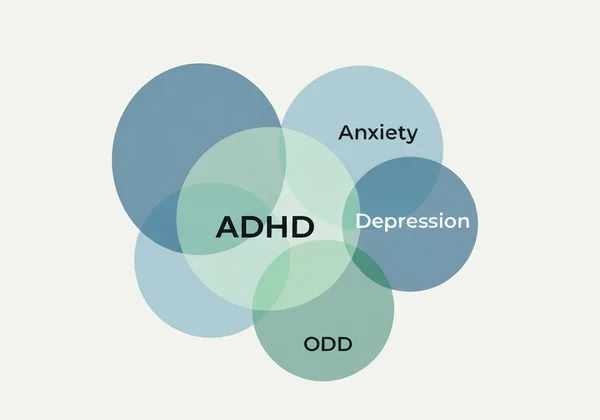
These conditions don't just exist side-by-side; they interact. For instance, a child's impulsivity from ADHD might lead them to blurt out an answer in class. If they also have anxiety, the teacher's correction might feel like a huge failure, causing them to shut down and refuse to participate again.
Without understanding how these factors interact, you might focus only on the impulsivity. However, the anxiety could actually be the bigger barrier to your child's learning. The Vanderbilt results give you and your child's doctor the clues needed to see this bigger picture and develop a support plan that addresses all of your child's needs.
Your Child's Unique Story: From Scores to Actionable Understanding
Your Vanderbilt Assessment report marks the beginning of a journey, not the end. You've progressed from simply observing behaviors to having concrete data. Now, you can translate that data into a meaningful story that empowers you to take the next steps.
As you review your child's Vanderbilt Assessment results, consider these important insights:
- Look Beyond a Single Score: Focus on the patterns across different domains like inattention, hyperactivity, and emotional wellness.
- Identify the ADHD Profile: Understanding if your child's presentation is inattentive, hyperactive-impulsive, or combined helps tailor support strategies.
- Acknowledge Co-occurring Conditions: Pay close attention to signs of anxiety, ODD, or depression, as they are crucial to your child's overall well-being.
The real value of these results lies in how they help you see your child's unique strengths and challenges, not just a label. These results provide more than just numbers—they offer a roadmap to help your child thrive. To discover your child's profile and receive a report that turns complex data into actionable insights, start our free online assessment today.
Frequently Asked Questions About Vanderbilt Assessment Results Interpretation
What does a high score on the Vanderbilt assessment mean for my child?
A high score indicates that your child shows a significant number of behaviors related to ADHD or another condition at a frequency that is concerning. It is a "red flag" that strongly suggests a comprehensive evaluation by a qualified healthcare professional, such as a pediatrician or child psychologist, is needed.
How accurate is the Vanderbilt ADHD assessment for identifying specific profiles?
The Vanderbilt Assessment is a highly respected and scientifically validated screening tool used by professionals worldwide. It is very effective at identifying children who are at risk for ADHD and its different presentations. However, it is not a diagnostic tool on its own. A formal diagnosis requires a clinical interview and a more in-depth evaluation.
What conditions, besides ADHD, does the Vanderbilt Assessment screen for?
In addition to the core symptoms of ADHD (inattention and hyperactivity/impulsivity), the Vanderbilt Assessment also screens for several common co-occurring conditions. These include Oppositional Defiant Disorder (ODD), Conduct Disorder (CD), anxiety, and depression.
Can a Vanderbilt Assessment provide a definitive diagnosis?
No. It is critical to remember that the Vanderbilt Assessment is a screening tool, not a diagnostic instrument. It is designed to identify symptoms and guide further discussion. A definitive diagnosis of ADHD or any other condition can only be made by a qualified medical or mental health professional after a thorough evaluation.
After understanding these results, what are the recommended next steps?
The most important next step is to schedule an appointment with your child's doctor or a child psychologist. Bring a copy of the Vanderbilt report with you. A clear summary from our online assessment tool can serve as an excellent starting point for a productive conversation about your child's needs and the best path forward for support.