Understanding Your Vanderbilt Assessment Results: ADHD Next Steps & Doctor's Guide
Your child's vanderbilt assessment results are in, and it's natural to feel a mix of emotions – relief, concern, or even confusion. You may be asking, what does a high score on the Vanderbilt assessment mean? This guide is your compassionate roadmap for understanding those results and taking confident next steps towards supporting your child, including preparing for important conversations with doctors and educators. This journey begins with understanding, and you've already taken a courageous first step.
The information you've gathered is a powerful tool. It provides a structured snapshot of your child's behaviors, observed both at home and potentially at school. Now, let's turn this information into a clear action plan. Remember, these results are not a destination but a starting point for a productive conversation about your child's well-being. If you haven't completed an assessment yet, you can always take the first step on our platform.
Understanding Your Vanderbilt Assessment Results
The first step after receiving the report is to interpret it correctly. The scores provide valuable data, but the context behind them is what truly matters. This is about seeing the whole picture of your child, not just a series of numbers on a page.

Deciphering Your Standard Report: Key Areas & Scores
Your standard report from the NICHQ Vanderbilt Assessment Scale is organized into specific domains. You'll see scores related to Inattention, Hyperactivity/Impulsivity, and often, co-occurring conditions like Oppositional-Defiant Disorder (ODD), Conduct Disorder (CD), and Anxiety/Depression. The scoring highlights which areas meet the criteria for further evaluation. It’s crucial to understand that these scores flag behaviors that are more frequent or severe than is typical for a child's age. They are indicators, not a final verdict.
Beyond the Numbers: Insights from Your AI Personalized Report
While the standard report provides the "what," our unique AI-powered report, available through the trusted screening tool, helps uncover the "why." This enhanced analysis goes beyond scores by incorporating additional context you provide. It can offer personalized insights into how specific behaviors might manifest in daily life—at school, with friends, or during homework time. This deeper level of detail can be incredibly useful when discussing your concerns with a professional, as it translates scores into real-world scenarios.
What Do "Concerning" Scores Really Indicate?
A "concerning" or "high" score simply indicates that your child’s behaviors in a particular area warrant a professional conversation. It is a signal to dig deeper. It does not automatically mean your child has ADHD or any other condition. Many factors can influence a child's behavior, including sleep issues, learning difficulties, environmental stress, or even temporary life changes. The Vanderbilt assessment is a highly reliable screening instrument designed to identify children who would benefit from a comprehensive evaluation by a qualified professional.
Preparing for Your First Doctor's Appointment About ADHD Concerns
Walking into a doctor's office with your report is a proactive step. Being well-prepared will help you have a more focused and productive conversation. This is your opportunity to partner with your child's healthcare provider to create a plan.
Gathering Essential Documents: Your Vanderbilt Report & More
Your completed Vanderbilt ADHD assessment report is the centerpiece. Bring both the parent and teacher versions if available, as comparing perspectives is incredibly valuable for clinicians. In addition to the report from our online assessment tool, gather other relevant documents:
-
Report cards or notes from teachers about classroom behavior and academic performance.
-
Any previous developmental screenings or evaluations.
-
A brief journal of your own observations, noting specific examples of the behaviors that concern you.

Questions to Ask Your Pediatrician or Specialist
Go into the appointment with a list of questions. This ensures you don't forget anything important and shows that you are an engaged advocate for your child. Consider asking:
- Based on these screening results, what are your initial thoughts?
- What are the next steps in the evaluation process?
- Could other conditions explain these behaviors?
- What is your experience with diagnosing and managing ADHD in children?
- Can you refer us to a specialist, like a child psychologist or developmental pediatrician, if needed?
What to Expect During the Consultation
During the appointment, the doctor will likely review the Vanderbilt scores with you, ask detailed questions about your child's developmental history, health, and family life. They will want to understand the full context. They may also perform a physical exam to rule out any other medical causes for the symptoms. This initial consultation is primarily for information gathering. It’s rare for a diagnosis to be made in a single visit; this is the beginning of a careful and thorough process.
Navigating the Potential ADHD Diagnosis Process
The road to a potential diagnosis involves more than just one questionnaire. A formal diagnosis is a comprehensive process that considers multiple sources of information to ensure accuracy and rule out other possibilities.
The Role of Vanderbilt in a Comprehensive Evaluation
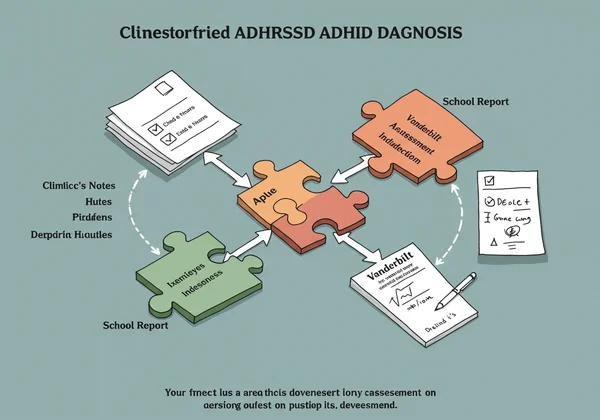
The Vanderbilt assessment is a critical part of the ADHD diagnosis process, but it is just one piece of the puzzle. A thorough evaluation, as recommended by the American Academy of Pediatrics (AAP), includes a detailed clinical interview with you and your child, direct observation of your child, and gathering information from multiple settings (like home and school). Your report from the Vanderbilt parent form serves as the perfect, evidence-based starting point for this evaluation.
Understanding Differential Diagnoses and Co-occurring Conditions
A key task for a clinician is to perform a differential diagnosis. This means determining whether the symptoms are truly due to ADHD or another condition that can look similar, such as anxiety, a learning disability, or even trauma. The Vanderbilt scale is helpful here because it also screens for common co-occurring conditions. It's not uncommon for a child with ADHD to also struggle with anxiety or ODD, and identifying these related challenges is essential for creating an effective support plan.
If a Diagnosis is Made: What Happens Next?
If a professional confirms an ADHD diagnosis, it is not an end point but the beginning of a new, more informed chapter. The next steps typically involve creating a multi-modal treatment plan. This often includes behavioral therapy, parent training in behavior management, and school-based accommodations and support. In some cases, medication may be discussed as part of the plan. The goal is to provide your child with the tools and support they need to thrive.
Considering a Child Psychologist or Specialist Consultation
While your pediatrician is an excellent first stop, the journey often involves specialists who have deep expertise in child development and mental health. A child psychologist consultation can provide invaluable support and guidance.
When to Seek a Child Psychologist or Behavioral Therapist
It's a good idea to seek a specialist if the situation is complex. For example, if there are significant learning challenges, high levels of family stress, or signs of co-occurring conditions like severe anxiety or depression. A child psychologist can conduct more in-depth testing, provide specialized therapies like Cognitive Behavioral Therapy (CBT), and help your family develop effective coping strategies. Getting this support can make all the difference.
The Benefits of Early Intervention and Professional Support
Research consistently shows that early intervention leads to better long-term outcomes for children with ADHD. Addressing challenges early can prevent the development of secondary issues like low self-esteem, poor social skills, and academic failure. Professional support empowers not just the child, but the entire family. You will learn new strategies to manage challenging behaviors and create a more positive and supportive home environment.

Finding the Right Specialist for Your Family
Finding the right fit is crucial. Ask your pediatrician for recommendations. You can also contact your insurance provider for a list of in-network specialists. Look for professionals who specialize in childhood ADHD and use evidence-based practices. When you start the assessment, you are building the foundation of information needed to connect with the right professionals for your family's unique needs.
Your Path Forward: Support and Advocacy
Taking the time to complete a Vanderbilt assessment and read this guide shows your deep commitment to your child's future. The results in your hand are not a label, but a launchpad for action and advocacy. They provide the clarity needed to start meaningful conversations with doctors, teachers, and specialists. By following these steps, you are transforming concern into a constructive plan.
Remember, you are your child's greatest champion. This path may have its challenges, but it is also filled with opportunities for growth and understanding. Continue to gather information, ask questions, and build a strong support team. You are laying a strong foundation for your child's well-being and success. To begin or review your child's screening, feel free to explore our assessment.
Frequently Asked Questions After Your Vanderbilt Assessment
What does a "high score" on the Vanderbilt Assessment truly indicate?
A high score on the Vanderbilt assessment indicates that a child is exhibiting behaviors related to inattention, hyperactivity, or other screened conditions more frequently or severely than their peers. It is a statistical flag that strongly suggests a comprehensive professional evaluation is warranted. It is a screening result, not a diagnosis.
How accurate is the Vanderbilt ADHD assessment as a screening tool?
The Vanderbilt ADHD assessment is considered a highly reliable and valid screening tool when used correctly. It was developed by the NICHQ and is recommended by the American Academy of Pediatrics. Its accuracy is highest when information is gathered from both parents and teachers, providing a well-rounded view of the child's behavior across different environments.
What conditions, beyond ADHD, can the Vanderbilt Assessment screen for?
The Vanderbilt Assessment is a comprehensive ADHD screening tool that also includes sections to screen for common co-occurring conditions. These include Oppositional-Defiant Disorder (ODD), Conduct Disorder (CD), and Anxiety and Depression. Identifying these potential issues early is a key benefit of using our initial ADHD screening tool.
How should I discuss my child's Vanderbilt results with their school?
Schedule a meeting with your child's teacher, school counselor, or principal. Approach the conversation collaboratively, framing it as, "We've gathered some information to better understand our child, and we'd like to partner with you to support them." Share a copy of the report and ask for their observations and insights. This can be the first step in developing school-based supports or an Individualized Education Program (IEP) if needed.